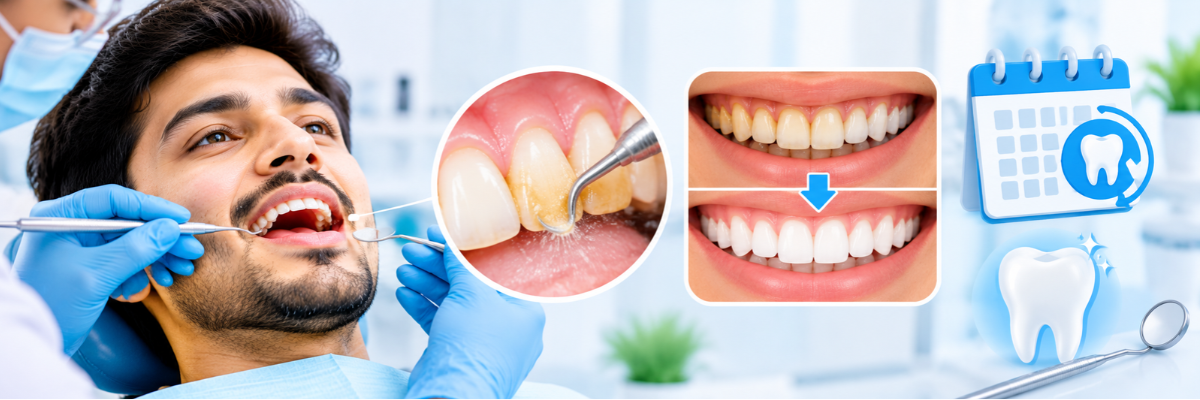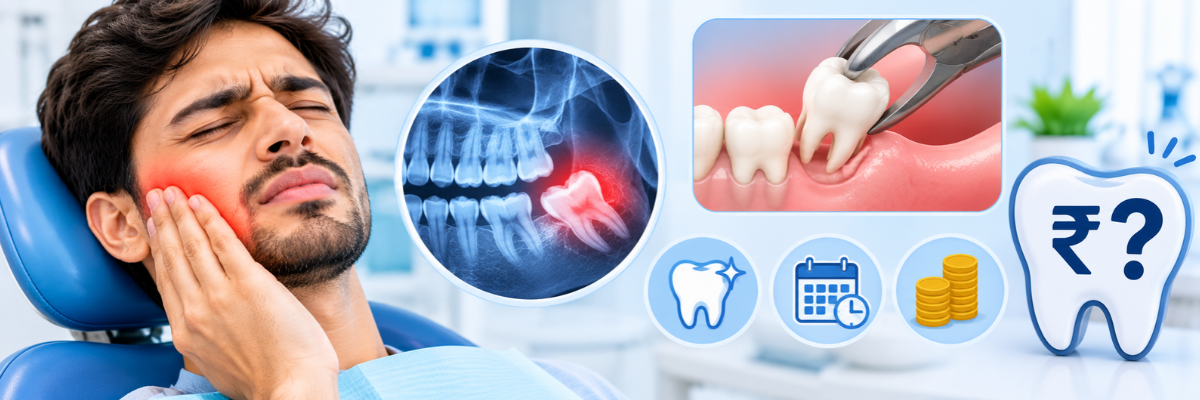
In short: A toothache from decay happens when a cavity grows past the hard outer enamel and reaches the softer layers and nerve inside. Treatment depends on how deep it has gone: early decay may need only a filling, deeper decay may need a root canal, and a badly broken tooth may need to be removed. Pain that eases on its own doesn't mean the problem has gone, so get it checked.
A toothache has a way of showing up at the worst time: late at night, before a trip, in the middle of a work week. If yours is coming from a cavity, the good news is that decay is one of the most treatable dental problems, especially when it's caught early. Here's what's happening inside your tooth, what you can do tonight to settle it, and how toothache from decay is treated.
Why does tooth decay cause a toothache?
Decay starts when bacteria in plaque turn sugars into acid, and that acid dissolves the tooth's enamel. At first there's no pain, because enamel has no nerves. The toothache starts when the cavity goes deeper.
The earlier the stage, the simpler the treatment. That's the whole reason it's worth getting a twinge checked rather than waiting for the throb.
What can I do for a toothache tonight?
These steps can ease discomfort for a while. They don't treat the cause, so you'll still need a dentist.
Rinse gently with lukewarm salt water. It cleans the area and can soothe the gum.
Clean around the tooth with floss or a soft brush so food isn't stuck in the cavity.
Hold a cold pack on the outside of your cheek, wrapped in a cloth, for short spells if it's swollen or throbbing.
Keep your head raised when lying down. Lying flat increases blood flow to the head and can make a throb feel worse.
Avoid very hot, very cold, sweet and hard foods on that side.
Use over-the-counter pain relief only as the label or your pharmacist advises. Don't place tablets directly on the gum, because it can burn the tissue.
Does a toothache from a cavity go away on its own?
The pain may ease, but the decay doesn't heal. If the nerve inside the tooth has been badly damaged, the pain can fade because the nerve has died, while infection carries on quietly at the root. That's why a toothache that "went away" can come back stronger, often with swelling. If the pain stopped by itself, it still deserves a check.
When is a toothache an emergency?
Get seen the same day if you have:
swelling in your face, jaw or around an eye,
a fever along with tooth pain,
difficulty swallowing or opening your mouth,
difficulty breathing (go to the nearest hospital emergency department at once),
pain that is severe and not settling at all.
Swelling that spreads is a sign the infection is moving beyond the tooth. For infections that need surgical care, see our oral and maxillofacial surgery page.
How is toothache from decay treated?
Your dentist will look at the tooth, test it, and usually take an X-ray to see how deep the decay goes. The options below are listed from simplest to most involved.
Monitoring and fluoride care. For very early spots that haven't broken through the enamel.
A filling. The decayed part is cleaned out and the tooth is rebuilt with a filling material. This is the most common treatment.
Root canal treatment. When decay has reached the nerve, the infected pulp is cleaned out, the space is sealed, and the tooth is usually protected with a crown. It's a way of keeping your own tooth. Our root canal treatment page explains each step.
A crown. For a tooth that has lost a lot of structure and needs covering to stay strong.
Extraction. If the tooth can't be saved. We'll talk through replacement choices, such as an implant, so there's no gap left unplanned. See our post on what to eat after a tooth extraction.
Your dentist or oral and maxillofacial surgeon will explain which one fits your tooth, and why, before anything starts.
How can I stop cavities coming back?
Brush twice a day with a fluoride toothpaste, and clean between teeth daily.
Cut down on how often you have sugar, not just how much. Sweet tea through the day, biscuits with every cup, or frequent sweets keep your teeth in an acid bath for hours.
Rinse your mouth with water after sweets and after meals.
Don't go to sleep right after a sugary snack without brushing.
Get a check-up and a clean at the interval your dentist suggests. Cavities caught early are small cavities.
Visiting us in Narsingi
Neoface Dental & Maxillofacial Clinic is at Plot 120, 3rd Floor, Above Global Eye Hospital, Narsingi, Hyderabad, Telangana 500075, close to Manikonda, Puppalaguda, Kokapet, Gandipet and Gachibowli. To have a toothache examined, contact the clinic on +91-7842317873. Find us on Google Maps.
Reviewed by Dr. S. Nitesh Reddy, Senior Consultant Oral & Maxillofacial Surgeon, Reg. No. A17143. This article is for general information and does not replace a clinical examination.