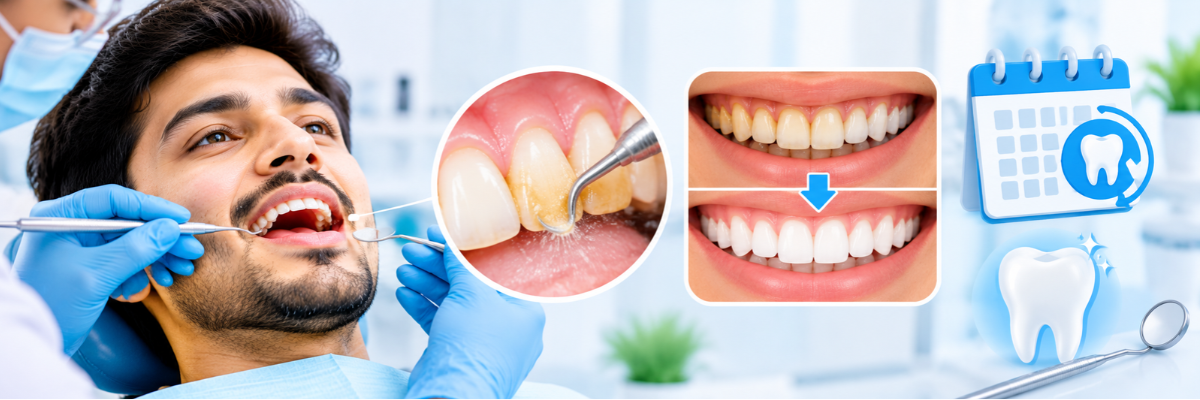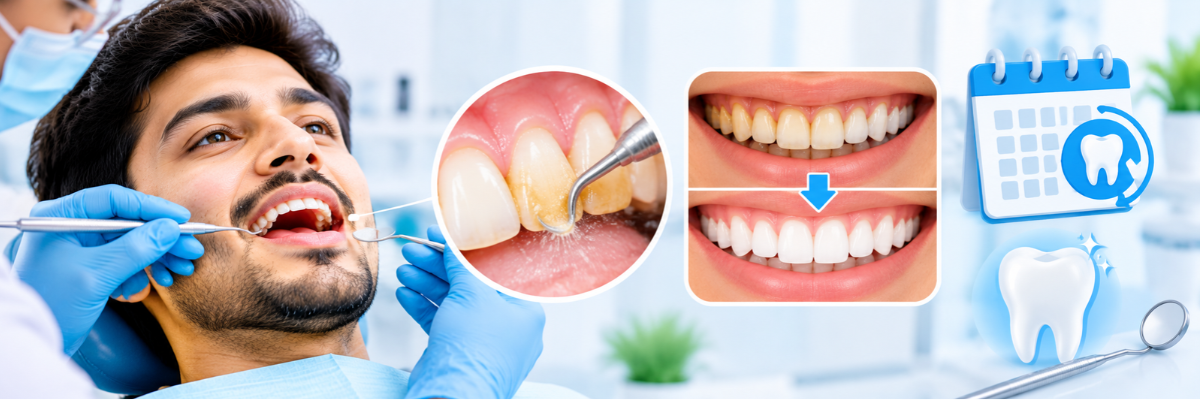
In short: Scaling and polishing is a professional teeth cleaning. Scaling removes plaque and hardened tartar from above and just below the gumline, which brushing can't shift. Polishing then smooths the tooth surface so less plaque sticks. Most people are advised to have it every six months to a year, but your dentist will set the interval based on the health of your gums.
If you've been putting off a teeth cleaning because you're not sure what it involves, you're in good company. A lot of us wonder whether scaling and polishing hurts, whether it wears the teeth down, or whether it's even necessary if we brush properly. Let's go through it all, step by step, so you know exactly what to expect.
What is scaling and polishing?
It's a two-part professional clean:
Scaling removes plaque (the sticky film of bacteria) and tartar (also called calculus, which is plaque that has hardened). The dentist or hygienist uses an ultrasonic scaler, which uses tiny vibrations and water, and sometimes hand instruments, to loosen and remove the deposits.
Polishing uses a soft rubber cup and a gritty paste to smooth the tooth surfaces and remove light surface stains, so plaque finds it harder to cling on.
Why can't I just brush it off?
Tartar is hard, like cement, and it bonds to the tooth. A toothbrush can't remove it, no matter how well you brush. It also gives plaque a rough surface to stick to, and it often sits right at or under the gumline, where bristles don't reach. Left alone, it irritates the gums, which then swell and bleed. See our guides on bleeding gums and gum swelling if that sounds familiar.
Who needs scaling and polishing?
Most adults benefit from a professional clean at regular intervals. You may need one sooner if you notice:
gums that bleed when you brush or floss,
red, puffy or tender gums,
bad breath that doesn't go away with brushing (see bad breath: causes and remedies),
yellow or brown deposits near the gumline,
a rough feeling on the inside of your lower front teeth,
stains from tea, coffee, tobacco or paan.
What happens during a scaling and polishing visit?
Check. The dentist examines your teeth and gums and may measure the small spaces between gum and tooth to see how healthy the gums are.
Scaling. The scaler removes tartar and plaque from the visible surfaces and from just under the gumline. You'll feel vibration and water spray, and there is a suction tube to keep your mouth comfortable.
Polishing. A soft cup and paste smooth the surfaces.
Flossing and rinse. Spaces between teeth are cleaned and your mouth is rinsed.
Advice. You'll get tips on brushing, cleaning between teeth and how long until your next visit.
Most visits take around half an hour to an hour, depending on how much buildup there is. If your gums are sore, the dentist can adapt the way they work. Tell them if anything feels uncomfortable at any point.
Does scaling damage your teeth?
No, not when it's done properly. Scaling removes deposits sitting on the enamel, not the enamel itself. A few things people commonly worry about:
"Scaling makes gaps." What actually happens is that the tartar and swollen gum that were filling the spaces are gone. The gaps were there already, hidden under the buildup.
"Teeth feel loose afterwards." If gum disease has already loosened the support, removing the tartar reveals it. The cleaning isn't what weakened the tooth, and it's the first step to stabilising it.
"Sensitivity." Teeth can feel sensitive to hot and cold for a few days. It usually settles. See tooth sensitivity causes.
Routine cleaning or a deeper clean?
Your dentist decides which one you need after looking at your gums.
Is some bleeding after scaling normal?
Often, yes. If gums were inflamed, they may bleed a little during and after the clean and feel tender for a day or two. Bleeding usually reduces over the next few days as the gums heal and become healthier. Brush gently, floss daily and the bleeding generally settles. If it continues for more than a week or gets heavier, let your dentist know.
What should I do after scaling and polishing?
Brush gently twice a day and clean between your teeth daily.
If your teeth are sensitive, use a toothpaste made for sensitivity and avoid very hot or cold things for a few days.
A warm salt-water rinse can soothe tender gums.
You can eat normally once any numbness has gone.
If you've had a deep clean, follow the specific advice your dentist gives you.
How often should I get my teeth cleaned?
There's no single answer. Many people are advised every six months, some every year, and people with gum disease may need to come back more often. Smokers, people with diabetes, and those who build tartar quickly often fall in the more frequent group. Your dentist will tell you what suits your mouth.
Is scaling the same as teeth whitening?
No. Scaling and polishing cleans your teeth and removes surface stains. It doesn't change the natural shade of the tooth. If you want a whiter shade, that's a separate treatment. Our teeth whitening page explains how it works. A clean beforehand is usually recommended so that whitening works evenly.
Lifestyle habits in Hyderabad that build tartar faster
Many of us drink several cups of sweet tea or coffee during a working day, skip brushing late at night after a long shift, or use tobacco, gutka or paan, which stain teeth and irritate gums. None of this is a character flaw. It just means tartar may collect faster, and a regular clean is a practical habit rather than a luxury. Brushing last thing at night is the one that counts most.
Visiting us in Narsingi
If you're looking for teeth cleaning near Narsingi, Manikonda, Kokapet, Puppalaguda, Gandipet, Gachibowli or the Financial District, Neoface Dental & Maxillofacial Clinic is at Plot 120, 3rd Floor, Above Global Eye Hospital, Narsingi, Hyderabad, Telangana 500075. For an examination, contact the clinic on +91-7842317873. Find us on Google Maps.
Reviewed by Dr. B. Neeharika, Oral & Maxillofacial Surgeon, Reg. No. A5477. This article is for general information and does not replace a clinical examination.