In short: Tooth sensitivity usually happens when the protective outer layer of a tooth wears thin, or the gum pulls back and exposes the softer layer underneath (dentine). Cold, hot, sweet or sour things then cause a short, sharp twinge. Common tooth sensitivity causes include worn enamel, receding gums, cavities, a cracked tooth and recent dental work. A dentist can tell you which one is behind yours.
That sudden zing when you sip cold water or bite into an ice cream? You're not alone, and it usually has an explanation. In this guide we'll walk through the most common tooth sensitivity causes, what each one feels like, what you can safely try at home, and when it's time to get a dentist to take a look.
What is tooth sensitivity, really?
Every tooth has a hard outer shell called enamel. Under it sits dentine, a softer layer filled with microscopic channels that lead to the nerve in the middle of the tooth. When enamel wears away, or the gum recedes and uncovers the root, those channels are exposed. Cold, heat, sugar, acid or even a puff of air can then reach the nerve, and you feel that quick, sharp twinge. Sensitivity can affect one tooth or several. It can come and go, or stay for weeks.
What are the most common tooth sensitivity causes?
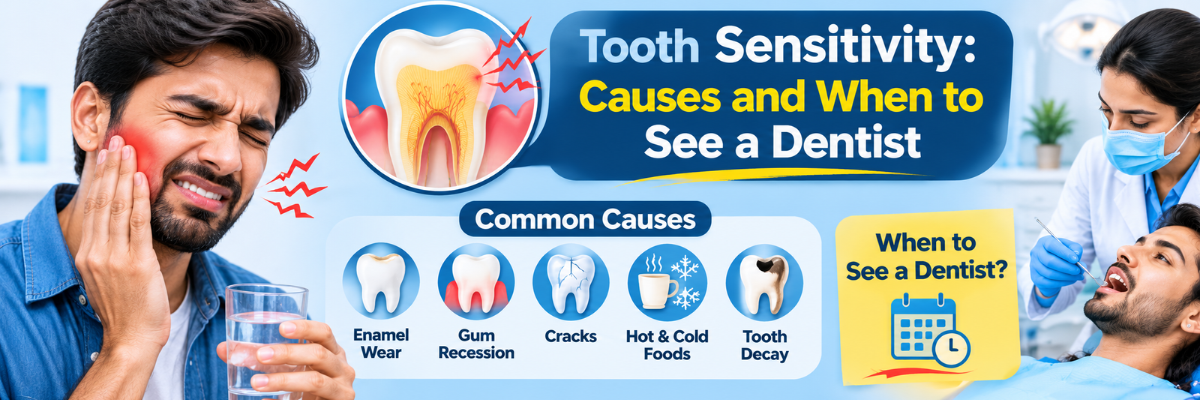
Worn enamel. Brushing too hard, using a hard-bristled brush, or sipping acidic drinks all day can thin the enamel over time.
Receding gums. When gums pull back, the root surface shows. Roots have no enamel cover, so they react quickly. Gum disease and rough brushing are common reasons.
Cavities (tooth decay). A small hole can make one tooth react to sweets or cold. If the twinge is always in the same spot, decay is worth ruling out.
A cracked or chipped tooth. A tiny crack may only hurt when you bite down or when something cold hits it.
An old or leaking filling. Fillings can wear or loosen with age, letting cold and sugar reach the tooth underneath.
Grinding or clenching. Grinding wears enamel flat and can crack teeth. If you wake up with a sore jaw, our guide on jaw pain and teeth grinding (confirm slug) may sound familiar.
Recent dental work. Teeth can feel sensitive for a short while after a filling, a cleaning or whitening. This usually settles; tell your dentist if it doesn't.
Gum disease. Swollen, bleeding gums and sensitive teeth often travel together. See our posts on bleeding gums and gum swelling.
What is your sensitivity trying to tell you?
This table is a rough guide, not a diagnosis. Only an examination can say what's going on.
Why are my teeth sensitive to cold?
Cold sensitivity is the most common type. A cold drink makes the fluid in the dentine channels move, and the nerve reacts. If the twinge goes away within a few seconds, it's usually exposed dentine. If the ache lingers well after the cold is gone, the nerve itself may be unhappy, and that's a good reason to see a dentist sooner rather than later.
What can I try at home?
These steps can ease mild sensitivity while you wait for an appointment. They don't fix a cavity or a crack.
Switch to a soft toothbrush and brush gently in small circles. Scrubbing back and forth wears enamel and gums.
Use a fluoride toothpaste made for sensitive teeth. Use it twice a day for a few weeks, since it works gradually. Spreading a little on the sensitive spot at night helps some people.
Go easy on acidic foods and drinks, such as colas, lemon water, tamarind and pickles. After having them, rinse with water and wait about 30 minutes before brushing, because acid softens enamel for a while.
Avoid very hot or very cold items for a few days if they set it off.
Don't skip brushing because it hurts. Plaque makes gums and teeth more reactive.
Hyderabad habits that can trigger sensitivity
A lot of daily life here involves temperature swings for teeth: piping hot chai or filter coffee, then a cold drink or kulfi. Sweet tea sipped through the day, tangy chutneys and pickles, and fizzy drinks add sugar and acid on top. None of these is "bad" on its own. It's the frequency, and the sudden hot-to-cold switch, that tires enamel. Taking sips of water in between and keeping sweet or sour items to mealtimes is a simple way to go easier on your teeth.
When should I see a dentist?
Book an appointment if:
the sensitivity doesn't settle after a few weeks of gentle care,
the pain wakes you at night or lingers after hot or cold,
it hurts when you bite,
you can see a hole, a crack or a chipped edge,
your gums are swollen, bleeding or pulling back,
you've noticed it spreading to more teeth.
Go sooner if you have swelling in your face or gums, a bad taste, or a fever alongside tooth pain.
How do dentists treat sensitive teeth?
Treatment depends on the cause. After an examination, and an X-ray when needed, your dentist may suggest:
Fluoride or desensitising applications on the sensitive areas.
A filling or bonding over an exposed root surface or a worn spot.
Treating a cavity or replacing an old filling.
Gum treatment if gum disease or recession is involved. See Post 17 on scaling and polishing.
A night guard if grinding is wearing your teeth.
Root canal treatment if the nerve is inflamed or infected. Read more on our root canal treatment page.
Can sensitive teeth go away on their own?
Sometimes. Sensitivity after a cleaning, filling or whitening often settles within days or a few weeks. Sensitivity from worn enamel or receded gums usually doesn't disappear by itself, because enamel doesn't grow back. It can be managed well, though, once the cause is dealt with. If you're thinking about whitening, ask first, because it can bring on sensitivity in some people. We cover this on our teeth whitening page.
Visiting us in Narsingi
If you're searching for a dentist near Narsingi, Manikonda, Puppalaguda, Kokapet, Gandipet, Gachibowli or the Financial District, you'll find Neoface Dental & Maxillofacial Clinic at Plot 120, 3rd Floor, Above Global Eye Hospital, Narsingi, Hyderabad, Telangana 500075. For an examination, contact the clinic on +91-7842317873. Find us on Google Maps.
Reviewed by Dr. B. Neeharika, Oral & Maxillofacial Surgeon, Reg. No. A5477. This article is for general information and does not replace a clinical examination.